If you have seen boquarones written on a menu or food website, you are probably looking for boquerones. The standard Spanish word boquerones means anchovies. Spanish dictionaries use the term for the fish and for culinary preparations using anchovies.
The spelling confusion is understandable. People often hear Spanish food names before seeing them written. Different accents can also make unfamiliar words difficult to spell. Online restaurant reviews even contain the spelling boquarones, showing that people genuinely search for and use this variation.
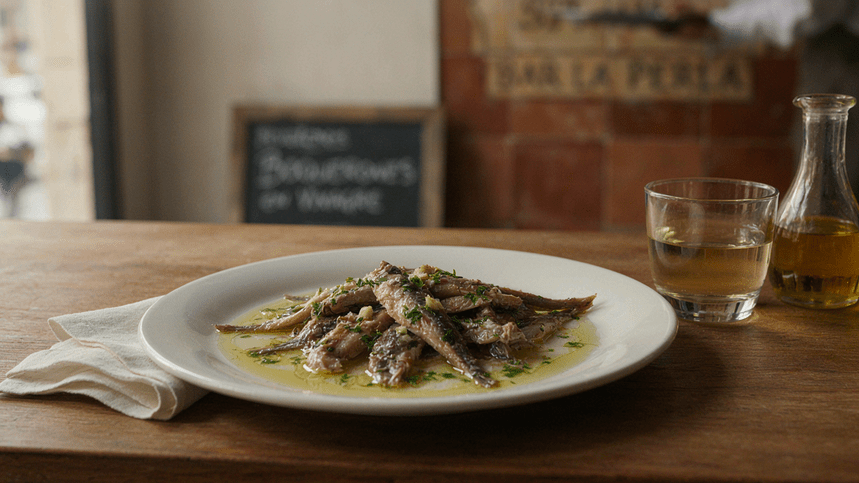
In Spanish cooking, boquerones usually refer to fresh anchovies. One famous preparation is boquerones en vinagre. The cleaned fish is marinated and commonly finished with garlic, parsley, and olive oil. The result is a bright and refreshing Spanish tapa rather than the dark, intensely salty anchovy many people know from cans.
Table of Contents
Boquarones vs Boquerones: What Is the Correct Spelling?
The correct standard Spanish spelling is boquerones. The singular form is boquerón. SpanishDictionary translates boquerón as anchovy and gives boquerones as its plural form.
However, boquarones appears online in restaurant reviews, menus, and informal food discussions. This suggests it often develops from phonetic spelling rather than representing a separate dish. For SEO purposes, a helpful page can explain both forms rather than pretending they mean different foods.
This approach also improves search usefulness. Someone typing the incorrect spelling usually wants information about Spanish anchovies. A strong article should therefore answer that need immediately. It should explain the spelling, ingredients, taste, preparation, and food safety. This creates better content than repeating a keyword without giving readers useful information.
When writing menus, recipes, or formal food guides, use boquerones. When optimizing content, you can still naturally mention the searched variation where it helps readers understand the topic.
What Do Boquarones Taste Like?
Many people expect boquarones to taste extremely salty because they associate all anchovies with canned anchovy fillets. The Spanish vinegar-marinated version is quite different. Its flavor is generally fresher, lighter, and more acidic.
Vinegar gives the fish a sharp and refreshing taste. Olive oil adds richness and creates a smoother finish. Garlic brings a strong savory note, while parsley adds freshness. Salt supports all these flavors without needing to dominate them.
The texture also surprises first-time eaters. Properly prepared fresh anchovies can feel tender and delicate rather than dry or tough. Because they are commonly served chilled, the dish works well as a small appetizer during warm weather.
People who dislike heavily salted anchovies may still enjoy this preparation. The experience is closer to marinated seafood than a strongly cured canned fish. That difference explains why Spanish-style white anchovies have become popular far beyond Spain.
What Are Boquerones en Vinagre?
Boquerones en vinagre literally refers to anchovies prepared in vinegar. It is a well-known Spanish appetizer. Clean anchovy fillets are marinated before being served with ingredients such as garlic, parsley, and olive oil.
This dish is one of the main foods people are searching for when they type boquarones online. The vinegar changes both the flavor and appearance of the fish. Fresh anchovy flesh becomes pale during marination, creating the recognizable white fillets often seen in tapas displays.
A simple plate may contain only the marinated fish, olive oil, garlic, parsley, and salt. Other versions may include olives, bread, pickled vegetables, or potato chips. Preparation can vary by restaurant and family tradition.
The beauty of the dish comes from its simplicity. There are very few ingredients, so freshness and careful handling matter greatly. Good fish, balanced vinegar, quality olive oil, and fresh herbs can create a surprisingly flavorful appetizer.
Boquarones and Anchoas: Are They the Same?
This question causes plenty of confusion. Both terms can relate to anchovies, but Spanish food culture often uses them differently. Boquerones commonly describes fresh anchovies or anchovies prepared with vinegar. Anchoas often refers to anchovies that have been salt-cured and preserved in oil.
Therefore, boquarones should not automatically make you imagine the dark anchovy fillets found on some pizzas. Those cured anchovies have a stronger, saltier, deeper flavor. Vinegar-marinated white anchovies tend to taste brighter and milder.
The fish can be closely related, but processing changes the final food dramatically. Think about how fresh grapes and raisins come from the same fruit but provide different eating experiences. Preparation matters.
Understanding this difference also helps when ordering Spanish tapas. If you prefer mild seafood with acidity and olive oil, look for boquerones en vinagre. If you want a concentrated salty flavor, cured anchoas may suit you better.
Main Ingredients Used in Boquarones
Traditional boquarones style preparations do not need a long ingredient list. Fresh anchovy fillets form the base. Vinegar provides acidity, while salt helps season the fish. Olive oil adds body and richness after marination.
Garlic and parsley are two classic additions. Garlic provides a bold Mediterranean flavor. Fresh parsley adds color and a cleaner herbal finish. Some cooks also include small variations depending on local preference.
The quality of each ingredient matters because nothing is hidden beneath a heavy sauce. Poor olive oil can make the dish taste flat. Old garlic may taste bitter. Fish that has been handled badly can ruin the entire plate.
This simplicity is one reason traditional foods remain so appealing. You do not need complicated equipment or expensive decorations. You need good ingredients and safe preparation. When those basics are respected, a small anchovy fillet can become a memorable Spanish tapa.
How Boquarones Are Traditionally Prepared
Preparing boquarones begins with cleaning fresh anchovies and separating them into neat fillets. The bones, head, and internal parts are removed. The fish is then handled according to proper food-safety requirements before the marinating process starts.
The prepared fillets are placed in a vinegar-based mixture. During marination, their appearance becomes lighter. Afterward, the liquid is drained. Garlic, parsley, olive oil, and seasonings are then added.
One important point is often missing from casual online recipes: vinegar should not be treated as a substitute for proper parasite-control measures. Spain’s food-safety authority specifically lists boquerones en vinagre among homemade fish preparations requiring freezing. For a domestic freezer capable of reaching −20°C or colder, AESAN recommends keeping the fish frozen for five days.
That safety step matters more than making the recipe look perfectly traditional.
Food Safety When Making Boquarones at Home
Anyone preparing boquarones at home should treat food safety as part of the recipe, not an optional extra. Vinegar changes flavor and texture, but ordinary marinating does not reliably destroy Anisakis larvae. Spanish food-safety research specifically states that traditional vinegar treatment alone is insufficient for this purpose.
AESAN advises home cooks using suitable domestic freezers to freeze fish at −20°C or colder for five days when making preparations such as boquerones en vinagre. If a home freezer cannot reach the needed temperature, the agency recommends buying fish that has already been frozen.
The FDA also notes that previously frozen fish reduces parasite risk, although freezing does not destroy every harmful germ. Thorough cooking remains the safest approach for seafood. Pregnant people, young children, older adults, and people with weakened immune systems face greater foodborne illness risks from raw or undercooked seafood.
Are Boquarones Healthy?
Like many seafood dishes, boquarones can fit into a varied diet. Anchovies are small fish that provide protein and naturally occurring fats. However, the total nutritional value of a serving depends on how the fish is prepared and how much salt or oil is added.
A vinegar-marinated version may appear light, but large amounts of olive oil increase calories. Salt levels can also vary greatly between recipes and packaged products. Anyone limiting sodium should check labels or ask how a restaurant prepares its dish.
Portion size also matters. Spanish tapas are traditionally small plates, which makes it easy to enjoy several foods together instead of eating one very large serving.
Nutrition should not be reduced to calling one food either “healthy” or “unhealthy.” A better approach is to look at ingredients, portions, preparation, and your overall diet. Fresh seafood prepared carefully can be part of a balanced eating pattern.
How to Serve Boquarones Like Spanish Tapas
Serving boquarones does not require complicated presentation. Arrange the white anchovy fillets neatly across a plate. Add olive oil, chopped parsley, and small pieces of garlic. Keep the finished dish chilled until serving.
Bread is a natural partner because it absorbs the flavorful oil and vinegar. Olives also work well because their salty taste matches the seafood. Some tapas presentations include potato chips or other small snacks around the fish.
For a larger tapas table, pair the anchovies with Spanish tortilla, roasted peppers, tomatoes, olives, cheese, grilled vegetables, or seafood dishes. The goal is variety rather than creating one huge main course.
Presentation should remain simple. Fresh herbs and quality olive oil provide enough color. When I assess tapas-style recipes, the strongest versions usually avoid unnecessary toppings. Too many strong ingredients can hide the delicate anchovy taste rather than improving it.
Why Boquarones Are Popular in Spanish Food Culture
The popularity of boquarones makes sense when you understand Spanish tapas culture. Small dishes encourage people to share different flavors around one table. Anchovies work especially well because a few fillets can create a complete appetizer.
Restaurant reviews across Spain regularly mention the dish alongside other tapas and seafood choices. Reviews from Barcelona and Almería, for example, show diners ordering the anchovies as part of wider tapas meals.
The dish also reflects a wider Mediterranean cooking idea: simple ingredients can produce excellent food when they are handled carefully. Fish, vinegar, olive oil, herbs, and garlic are not complicated ingredients. Their balance makes the food memorable.
This simplicity also makes the dish easy to adapt. A traditional tapas bar may serve it plainly. A modern restaurant may include the same anchovies inside salads or more creative plates.
How to Choose Good Boquarones
When buying packaged boquarones, begin with the label. Check the storage instructions, expiration information, ingredients, and whether the product requires refrigeration. Keep chilled products properly refrigerated after buying them.
For homemade preparation, use fish from a reliable seafood seller. Ask whether the anchovies were previously frozen when you plan to prepare a raw-style marinated dish. Never assume vinegar alone makes fresh fish safe.
Appearance can help with quality assessment, but it cannot prove that fish is parasite-free. FDA guidance notes that visual inspection does not replace appropriate parasite controls for fish intended for raw consumption.
For frozen seafood, the FDA recommends avoiding damaged packages or products showing signs of thawing and refreezing. Large amounts of frost or ice crystals can signal poor storage history.
Good buying choices improve flavor and safety before cooking even begins.
Common Mistakes When Preparing Boquarones
One major mistake with boquarones is believing vinegar “cooks” the fish enough to remove every food-safety concern. Acidity changes proteins and texture, but parasite-control rules still matter. Follow recognized safety guidance instead of relying on appearance.
Another mistake is using too much garlic. Garlic should support the anchovy flavor rather than completely cover it. The same applies to vinegar. Excess acidity can make delicate fish unpleasantly sharp.
Poor-quality olive oil can also weaken the final dish. Because the recipe has very few ingredients, each one remains noticeable. A balanced oil improves texture without making the plate feel greasy.
Finally, avoid leaving seafood at room temperature for long periods. The FDA advises keeping perishable seafood refrigerated and generally not leaving it unrefrigerated for more than two hours, or one hour in temperatures above 90°F.
Small preparation details make a large difference.
Where Can You Find Boquarones?
You may find boquarones under several spellings when searching online, but restaurants serving authentic Spanish food are more likely to list the standard term boquerones. Spanish tapas bars, seafood restaurants, Mediterranean restaurants, and specialist food shops are good places to check.
Look specifically for boquerones en vinagre if you want the cold white anchovy preparation. If a menu simply says boquerones, ask how they are prepared. They may be marinated, fried, or served in another regional style.
Packaged marinated white anchovies are also sold by specialty food retailers. Some retailers describe them as Spanish-style white anchovy fillets and recommend serving them as tapas.
Checking preparation methods before ordering is useful because the word refers to the fish, not one single recipe. Fried anchovies and vinegar-marinated anchovies provide very different textures and flavors.
FAQs About Boquarones
1. What does boquarones mean?
The search term generally points to the Spanish word boquerones, which means anchovies. The standard singular form is boquerón. Dictionaries translate the culinary term directly as anchovy.
People searching the alternate spelling usually want information about Spanish fresh anchovies or the popular dish boquerones en vinagre. This preparation uses anchovy fillets with vinegar and commonly adds garlic, parsley, and olive oil. Understanding the spelling difference helps you find better recipes, restaurants, and product information online.
2. Are boquerones raw?
Vinegar-marinated boquerones are not cooked using normal heat. The vinegar changes their texture, color, and flavor, but this does not mean standard food-safety risks disappear.
Spanish food-safety authorities specifically require appropriate freezing controls for fish preparations such as homemade boquerones en vinagre. AESAN recommends five days at −20°C or colder when using a suitable domestic freezer. Therefore, recipes should include proper safety instructions instead of suggesting that vinegar alone makes raw-style seafood completely safe.
3. Are boquerones the same as anchovies?
Yes. Boquerones is a Spanish word for anchovies. However, food preparation creates an important distinction. In Spain, the word often describes fresh or vinegar-marinated anchovies, while anchoas commonly refers to salt-cured anchovies.
That is why two anchovy dishes can taste completely different. White vinegar-marinated fillets are usually lighter and more acidic. Salt-cured anchovies are darker and stronger. Knowing this difference makes Spanish restaurant menus much easier to understand.
4. How do you eat boquerones?
Boquerones can be eaten as a small Spanish tapa or appetizer. Vinegar-marinated fillets are commonly served chilled with olive oil, garlic, and parsley. Bread, olives, roasted peppers, potato dishes, and other tapas make good partners.
You can place a fillet on bread or enjoy it directly from the plate. There is no need for complicated sauces. The anchovy, vinegar, herbs, and olive oil already provide several strong flavors. When creating a tapas table, smaller portions work best because diners can enjoy many different dishes together.
5. What is the difference between boquerones and sardines?
Anchovies and sardines are different types of small oily fish, although they can look similar to people unfamiliar with seafood. Spanish boquerones refers to anchovies. SpanishDictionary translates boquerón directly as anchovy.
Both fish appear frequently in Mediterranean cooking, but recipes are not always interchangeable. Anchovies used for vinegar marination are usually small and delicate. Sardines are often grilled, fried, canned, or prepared whole. Checking the actual fish name on a menu prevents confusion.
6. Can you make boquerones safely at home?
Yes, but safe preparation is essential. Buy quality anchovies, clean them correctly, keep seafood cold, and follow established freezing guidance for raw-style marinated fish.
AESAN specifically lists boquerones en vinagre among foods that should be frozen when prepared at home. Its consumer recommendation is −20°C or colder for five days in a suitable domestic freezer. People with higher risks from foodborne illness should also follow medical and food-safety advice about consuming raw or undercooked seafood.
Conclusion
The term boquarones usually leads people toward one of Spain’s best-known anchovy foods. The standard Spanish spelling is boquerones, and boquerones en vinagre describes the famous vinegar-marinated preparation commonly finished with garlic, parsley, and olive oil.
Its appeal comes from contrast. The fish is tender. Vinegar adds brightness. Olive oil creates richness. Garlic and parsley complete the Mediterranean flavor. Most importantly, safe preparation should always come before tradition or presentation.
If you encounter the alternate spelling online, you now know what people are generally referring to. Search for boquerones when looking for authentic Spanish menus, recipes, or products. If you prepare them at home, follow recognized seafood freezing and refrigeration guidance. With good ingredients and careful handling, this simple Spanish tapa can offer a memorable introduction to Mediterranean seafood.